
The Best Bourbons for Collectors in 2026: A Tier-by-Tier Buying Guide
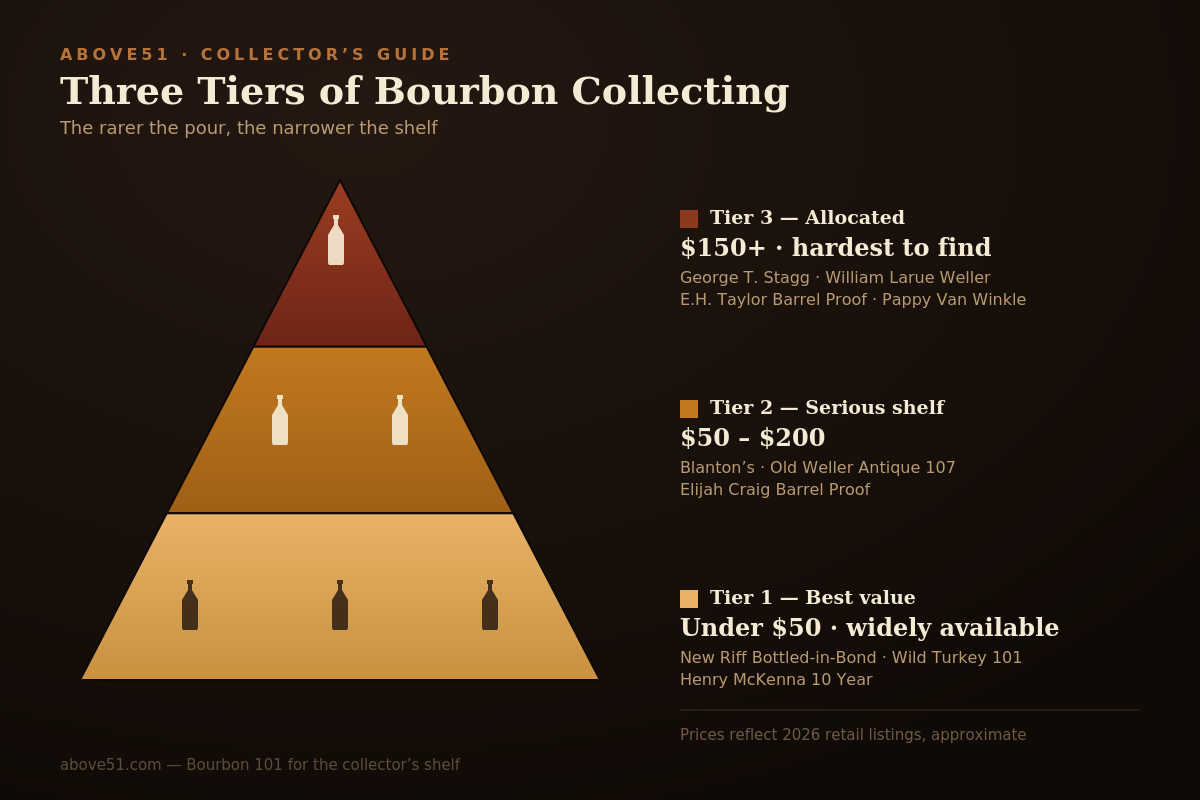
Quick answer: The best collector bourbons in 2026 fall into three tiers. For everyday drinking and shelf value, New Riff Bottled-in-Bond and Wild Turkey 101 punch far above their price. For serious collectors building a real shelf, Blanton’s Original, Old Weller Antique 107, and Elijah Craig Barrel Proof deliver genuine cask-strength or single-barrel quality under $200. For the allocated top tier, George T. Stagg, William Larue Weller, E.H. Taylor Barrel Proof, and Pappy Van Winkle remain the hardest bottles to find — and the ones that define a serious collection.
Below is a full breakdown of what to buy at each price point, what actually makes a bourbon “collectible,” and how to realistically get your hands on the allocated stuff.
New to bourbon rather than building a serious shelf? Start with our guide to what proof bourbon beginners should start with or how to drink bourbon for the first time before diving into allocated bottles.
What Makes a Bourbon Worth Collecting?
Before spending real money, it helps to know what separates a collector bottle from a shelf bottle. Four factors matter most:
- Proof. Cask-strength (or “barrel proof”) bourbons are bottled without water added after aging, so every batch is a little different. That variability is part of the appeal for collectors.
- Mash bill. Wheated bourbons (wheat instead of rye as the secondary grain) tend to be softer and richer — this is the Weller/Pappy Van Winkle family. High-rye bourbons bring more spice and bite.
- Age statement. Older isn’t automatically better, but well-aged barrels that avoid becoming over-oaked are prized, especially past the 10-year mark.
- Allocation. Limited annual releases with genuine scarcity (not artificial hype) hold long-term interest and, often, secondary market value.
With that framework, here’s how to spend your money at each tier.
Tier 1: Best Value Bourbons Under $50
You don’t need a big budget to drink well, and a few 2026 award winners prove it. If names like Buffalo Trace and Maker’s Mark got you into bourbon in the first place, see our best bourbons for beginners picks — these Tier 1 bottles are the natural next step up.
- New Riff Bottled-in-Bond (~$40) — Named World’s Best Bourbon at the 2026 World Whiskies Awards. Bottled-in-bond means at least 4 years old, exactly 100 proof, from a single distilling season. It’s the clearest proof that price and quality aren’t always linked.
- Evan Williams Bottled-in-Bond (under $25) — Another 2026 award winner. This is the bottle to hand a skeptical friend who thinks good bourbon has to be expensive.
- Wild Turkey 101 — Higher proof, more spice, and a reliable step up once you want more flavor without more cost.
- Henry McKenna 10 Year Single Barrel (~$68) — A full decade of aging at 100 proof, with a rich vanilla-oak-caramel profile. Frequently cited as one of the best value-to-age ratios in bourbon.
Tier 2: Serious Shelf Bourbons, $50–$200
This is where most experienced collectors actually spend their money — old enough to be interesting, still findable without a lottery.
- Blanton’s Original Single Barrel — The world’s first commercially marketed single barrel bourbon (1984), instantly recognizable by its horse-and-jockey stopper. Still one of the most sought-after bottles at retail.
- Old Weller Antique 107 — A wheated Buffalo Trace bourbon bottled at 107 proof. Once an everyday pour, now a cult favorite due to growing demand and shrinking availability.
- Elijah Craig Barrel Proof — Genuine cask strength (typically 118–133 proof), released in batches that vary year to year. Enthusiasts track the batch code on the label the way wine collectors track vintages.
- Colonel E.H. Taylor Single Barrel — Bottled-in-bond, from an individual barrel, with layered caramel, dried fruit, and toasted oak. A reliable entry point into the broader Taylor lineup.
- Kentucky Owl Confiscated (~$108) — A bold, high-history bottle for collectors who want something with a story behind the label.
Tier 3: Allocated and Hard-to-Find Bourbons
These are the bottles you don’t just walk into a store and buy — they require relationships with retailers, lottery entries, or patience.
The Buffalo Trace Antique Collection (BTAC) is the centerpiece of the fall allocation calendar and includes five expressions, released once a year, uncut and unfiltered at natural cask strength:
- George T. Stagg — High-rye, cask-strength bourbon aged 15+ years. The 2025 release crossed into “hazmat” territory at 142.8 proof, and secondary-market prices have been trending upward as a result.
- William Larue Weller — The only wheated bourbon in the BTAC lineup, aged 10–15 years depending on vintage, and distilled from the same recipe as W.L. Weller and Pappy Van Winkle.
- Eagle Rare 17 Year, Thomas H. Handy Sazerac Rye, and Sazerac 18 Year Rye round out the collection.
Outside the BTAC:
- E.H. Taylor Barrel Proof — Consistently ranked among the top allocated bourbons, from the historic Taylor line.
- Pappy Van Winkle (10, 12, 15, 20, and 23 Year) — Typically ships in late October and hits shelves through November. Demand is the steepest of any American whiskey release, and retail prices bear almost no relationship to secondary market prices.
- Parker’s Heritage Collection — Heaven Hill’s annual tribute release, with a different mash bill, finish, or aging process each year.
How allocation actually works
Retail prices on these bottles ($120–$150 MSRP is typical for BTAC releases) rarely reflect what they trade for. Realistically:
- Build a relationship with an independent liquor store. Chains rarely have discretion; small shops that get to know regular customers are far more likely to set bottles aside.
- Enter distillery and retailer lotteries. Many allocated releases (including Pappy Van Winkle in some states) are distributed through lottery systems rather than first-come-first-served sales.
- Track release calendars. BTAC typically drops in October, Pappy in November, Parker’s Heritage in October/November. Knowing the window matters more than showing up on a random Tuesday.
- Expect to pay secondary prices for anything already on a resale platform — and know that this is illegal to buy/sell in many states without a liquor license, so stick to legal retail channels.
Bourbon Buying Guide: Quick Comparison
| Bottle | Typical Price | Proof | Why Collectors Want It |
|---|---|---|---|
| New Riff Bottled-in-Bond | ~$40 | 100 | 2026 World’s Best Bourbon award |
| Henry McKenna 10 Year | ~$68 | 100 | Decade-aged single barrel value |
| Blanton’s Original | ~$65–90 retail | 93 | First commercial single barrel bourbon |
| Old Weller Antique 107 | ~$30–40 retail | 107 | Wheated Buffalo Trace, growing scarcity |
| Elijah Craig Barrel Proof | ~$70 | 118–133 (varies) | True cask strength, batch variance |
| Kentucky Owl Confiscated | ~$108 | Varies | History-driven, boutique label |
| George T. Stagg (BTAC) | $120 MSRP / high secondary | ~135–143 | Flagship high-rye cask strength, hazmat-proof years |
| William Larue Weller (BTAC) | $120–150 MSRP / high secondary | ~117–136 | Only wheated BTAC bottle |
| Pappy Van Winkle 15 | MSRP well below secondary | 107 | Most competitive release window of the year |
Frequently Asked Questions
What is the best bourbon for a beginner collector? Start with bottled-in-bond bourbons like New Riff or Henry McKenna 10 Year. They’re genuinely well-made, reasonably priced, and teach you what “good” tastes like before you chase allocated bottles.
What’s the difference between Pappy Van Winkle and William Larue Weller? Both come from the same wheated mash bill at Buffalo Trace. Pappy is aged longer (10–23 years) and released in smaller quantities at a lower, drinkable proof. William Larue Weller is aged 10–15 years and bottled at full cask strength with no water added.
Is bottled-in-bond bourbon a sign of quality? It’s a legal designation (aged at least 4 years, bottled at exactly 100 proof, from one distillery in one season), not a taste guarantee — but it’s a strong signal of craftsmanship, and several 2026 award winners are bottled-in-bond.
Why is allocated bourbon so hard to find at MSRP? Demand vastly outstrips the limited annual supply for bottles like BTAC and Pappy Van Winkle. Retailers receive only a handful of bottles per store, often distributed through lotteries rather than open sale.
Does bourbon appreciate in value if I don’t open it? Sealed allocated bottles (BTAC, Pappy) do trade for well above retail on the secondary market, but reselling alcohol without a license is illegal in most U.S. states. Collect for enjoyment, not as an investment vehicle.
Looking for a deeper dive on any single bottle mentioned here? Check our full bourbon reviews for tasting notes on individual releases, or if you’re planning to serve any of these at a get-together, our easy bourbon cocktails post has ideas for the more approachable bottles on this list.
Prices and availability reflect 2026 retail listings and are approximate — always check with a licensed retailer in your state for current pricing.